Product Literacy
Luma JournalA simple way to compare rechargeable designs: The details that deserve a second look — September 2026
Rechargeable design is more than a single label. A clear comparison begins with the everyday details that affect charging, care, storage, and your own routine.
By milburn laycie Im·
01 / the note
Quick answer
A simple way to compare rechargeable designs is to look beyond the word rechargeable and focus on the documented details that will matter in your own routine. Start with the charging method, what is included, the stated controls, the manufacturer’s care guidance, and the storage choices you can realistically make. These details do not tell you what you should choose. They give you a clearer basis for deciding whether a design fits your priorities. The best comparison is often a small one. Rather than trying to evaluate every feature at once, choose two or three questions that matter to you. You might ask how the item charges, where it will be stored, whether the official instructions are clear, and what support information is available if you need it. This approach keeps product research practical and leaves room to decide later.
02 / the note
Key takeaways
1. Rechargeable is a starting point, not a complete description of a design. 2. Use official product information for charging, care, controls, and included accessories. 3. Compare only the details that connect to your actual privacy, time, and storage needs. 4. Separate research from purchase so that information can remain useful without becoming urgent.
03 / the note
Begin with your daily constraints
Product comparisons are more helpful when they begin with life as it is, rather than with an ideal scenario. Consider where you live, how much privacy you have, how often you travel, and whether you prefer to keep charging equipment in one place. These are not minor details. They can influence whether a rechargeable design feels convenient, discreet, or unnecessarily complicated. You do not need to disclose these questions to anyone else to use them. A private note with a few preferences can be enough. For example, you may value a clear charging method because you do not want to guess which cable belongs to which item. You may care about storage because shared spaces make visual clutter uncomfortable. You may prefer simple controls because you want the instructions to be easy to revisit. Each preference is a legitimate comparison point. The goal is not to create a universal checklist. It is to identify what would reduce friction in your own routine. When a design meets one of your practical needs, that may be more meaningful than a long list of features that do not connect to your day.
04 / the note
Read the charging information closely
Charging information deserves a second look because it affects both the setup and the ongoing care of a product. When reviewing a rechargeable silicone wellness massager, look for the charging method stated by the manufacturer, any included cable or dock, and the instructions for charging before use. Use the official product page or supplied manual as the source of record rather than relying on assumptions from similar items. A useful question is not simply whether the item recharges. Ask whether you understand what the charging process involves. Is the relevant information easy to find? Does the stated method fit the space where you would keep the item? Will you be comfortable keeping the accessory with it or in a separate private location? These questions are about clarity and logistics, not about making a rushed choice. Do not infer charging duration, battery capacity, compatibility, or water resistance unless those specifications are explicitly documented. If one of those details matters to you and is not clear, that is a good reason to pause, seek the official manual, or contact customer support with a focused question.
05 / the note
Consider what comes with the design
Included accessories can change how a product fits into a routine. A cable, charging attachment, storage pouch, quick-start guide, or care instructions may each be useful, but their value depends on how clearly they are documented and how you expect to use them. Rather than assuming that every accessory is included, read the official list for the exact version you are considering. This matters especially when comparing listings. Product names can sound similar while packaging, included accessories, and regional availability differ. A considered comparison checks the specific product page, its documented contents, and any current information provided by the retailer or manufacturer. If the listing leaves an important point unclear, treat it as unknown rather than filling the gap with a guess. You can also decide which accessories you would actually want to store. A minimal setup may suit someone who values simplicity. Another person may prefer to keep official instructions or a designated cable together in a private container. Neither approach is better. The useful choice is the one you can maintain without extra stress.
06 / the note
Let controls inform the comparison
Controls are another area where the most useful details are concrete. Look for how the manufacturer describes operating the item, the number or style of controls shown in official images, and whether instructions explain how to turn it on, adjust settings, or charge it. Avoid assuming that a control layout will feel intuitive to you solely because it looks familiar. A product page can help you identify whether the design appears simple or more layered, but you can still keep the conclusion modest. You might say that the instructions seem clear enough for you to investigate further, or that you would prefer more documentation before choosing. You do not need to predict an entire experience from a product description. It can help to compare the control information with your own preference for learning new devices. Some people enjoy exploring a manual; others would rather have a limited number of clearly explained steps. Recognising that preference helps you compare with more kindness and less pressure to choose the most elaborate option.
07 / the note
Treat care guidance as essential information
Care guidance is part of the product, not an afterthought. For a rechargeable silicone wellness massager, look for the manufacturer’s stated cleaning and storage instructions, and follow the documentation supplied for the exact model. This supports practical decision-making because it tells you what kind of attention the item may require in your own space. It is better not to generalise from another product’s materials or maintenance instructions. Even when two items appear similar, their official guidance may differ. Read the care instructions before assuming how an item should be cleaned, dried, charged, or stored. If you cannot locate the relevant information, write down the question rather than improvising an answer. A care-focused comparison can be very simple. Ask whether the documentation is accessible, whether the steps are understandable, and whether you have a comfortable private place to keep the item according to that guidance. If the answer is not clear, you have learned something useful without needing to decide anything immediately.
08 / the note
Make storage part of the decision
Storage can be easy to overlook when comparing product pages, yet it often determines how relaxed a future routine feels. Think about where an item, its cable, and its documentation would go between uses. You may want a drawer, a personal bag, a dedicated container, or another space that feels private and dry. The right answer depends on your home and your boundaries. Planning storage is not about hiding something out of shame. It is about making a practical choice that respects your environment. If you share a home, a considered storage plan can reduce interruptions and make it easier to locate the information you need. If you live alone, it can still keep a routine organised and low-effort. When comparing rechargeable designs, consider whether the charging arrangement changes your storage plan. A design that needs a particular accessory may work well if you can keep the pieces together. A design with unclear accessory details may require more research. Again, the objective is not to find a perfect solution; it is to notice what will be workable.
09 / the note
Compare official support and documentation
Clear documentation can be as valuable as a feature list. Before making a decision, look for the official manual, product page, warranty information if provided, and customer support contact route. These sources can clarify what is included, how the item is meant to be cared for, and where to ask about a detail that is not stated. Support information should not be treated as a sign that you must have a problem. It is simply part of a transparent shopping experience. Knowing that a clear support route exists can make research feel less risky, especially if you have a factual question about charging, accessories, or product care. Keep questions specific. For example, ask whether a listed accessory is included with the exact product version, where to find official care instructions, or whether a manual is available. A focused question is easier to answer and avoids asking a support team to make a personal choice for you.
010 / the note
Avoid feature counting
Feature counting can turn a comparison into a contest. It encourages the idea that the design with the longest list must be the better option, even when those extras do not help your routine. A clearer comparison asks what a documented detail changes for you. Does it make charging more understandable? Does it make care easier to follow? Does it make storage more comfortable? This approach also prevents unsupported conclusions. A feature may be present without being important to you, and a simple design may be a better fit if it answers your core questions. You can value a clear manual over a broad list of unfamiliar terms. You can value a private storage plan over a specification you will not use. Try choosing three categories and writing one sentence for each: charging, care, and storage. If the product information helps you answer those three questions, you may have enough to decide whether to continue researching. If it does not, you know exactly what to investigate next.
011 / the note
Separate comparison from commitment
Research can feel heavy when it is treated as the first step of an unavoidable purchase. It is not. You are allowed to compare rechargeable designs for curiosity, to understand a gift category, to prepare a future choice, or to decide that you do not want to proceed. Information remains useful even when it leads to no purchase. Create a gentle stopping point. After reading a product page, close it and ask whether you have one clearer question than before. If you do, note it. If you do not, give yourself permission to return later. You do not have to make your research efficient in order for it to be valid. This separation matters because private decisions often benefit from time. A considered pace makes room for changing priorities, fresh information, and simple practical limits. You can revise your criteria without needing to defend the revision.
012 / the note
A low-pressure comparison method
A low-pressure comparison can take less than ten minutes. First, choose one product page and locate the documented charging information. Second, find the listed contents and care guidance. Third, consider where you would store the item and accessories. Finally, write one question that remains unanswered, or write that you have enough information for now. This method works because it is bounded. It does not ask you to compare every product, solve every preference, or make a purchase. It simply gives you a repeatable way to read product information with more care. You can use it for a rechargeable silicone wellness massager A0158 or for another item with official documentation. If the process becomes tiring, stop. The comparison is meant to serve your judgment, not exhaust it. You can return to the same three questions later and see whether the answer changes.
013 / the note
Frequently asked questions
### What should I compare first in a rechargeable design? Start with the documented charging method, included accessories, and official care guidance. These details often affect whether a design will fit your storage, privacy, and everyday practical needs. You can add controls or support information if those points are important to you. ### Should I choose the design with the most features? Not necessarily. A longer feature list does not automatically make a product a better fit. Compare the features that solve real practical questions for you, and use official information to understand what is actually documented for the exact product version. ### What if product information is incomplete? Treat the missing detail as a question rather than an assumption. Look for an official manual, contact the manufacturer or retailer through the stated support route, or decide to pause the comparison. Waiting for clearer information is a valid outcome.
014 / the note
A considered next step
Choose one rechargeable design to review for ten minutes. Read only its documented charging method, included contents, and care guidance. For the rechargeable silicone wellness massager A0158, use the official product information for those details instead of drawing conclusions from a similar item. Then write one sentence: this design fits my current practical needs, I need one more documented answer, or I would rather continue later. That small conclusion gives you a calm, useful place to stop. You can revisit the same comparison after a few days without starting over. Keep the criteria simple: what will I need to charge it, how will I care for it according to the manufacturer, and where can I store it comfortably? A product decision becomes more personal when these everyday questions have room alongside any feature list.
“Choose what belongs in your routine, at your own pace.”
Related product
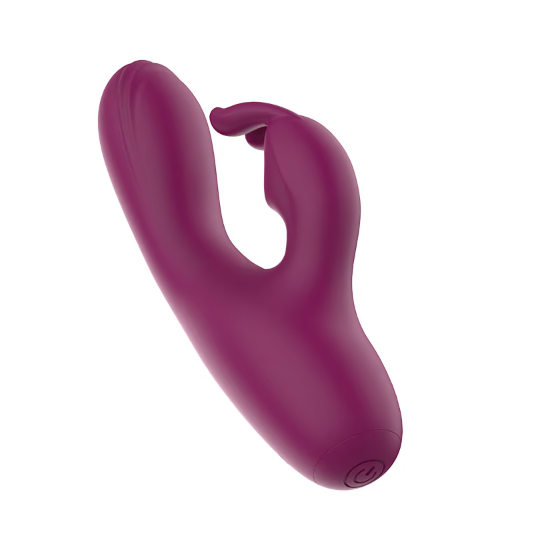
Rechargeable Silicone Wellness Massager A0158
A compact dual-motor wellness massager with soft-touch silicone and seven varied patterns.
Read product details